
Last updated November 14, 2026
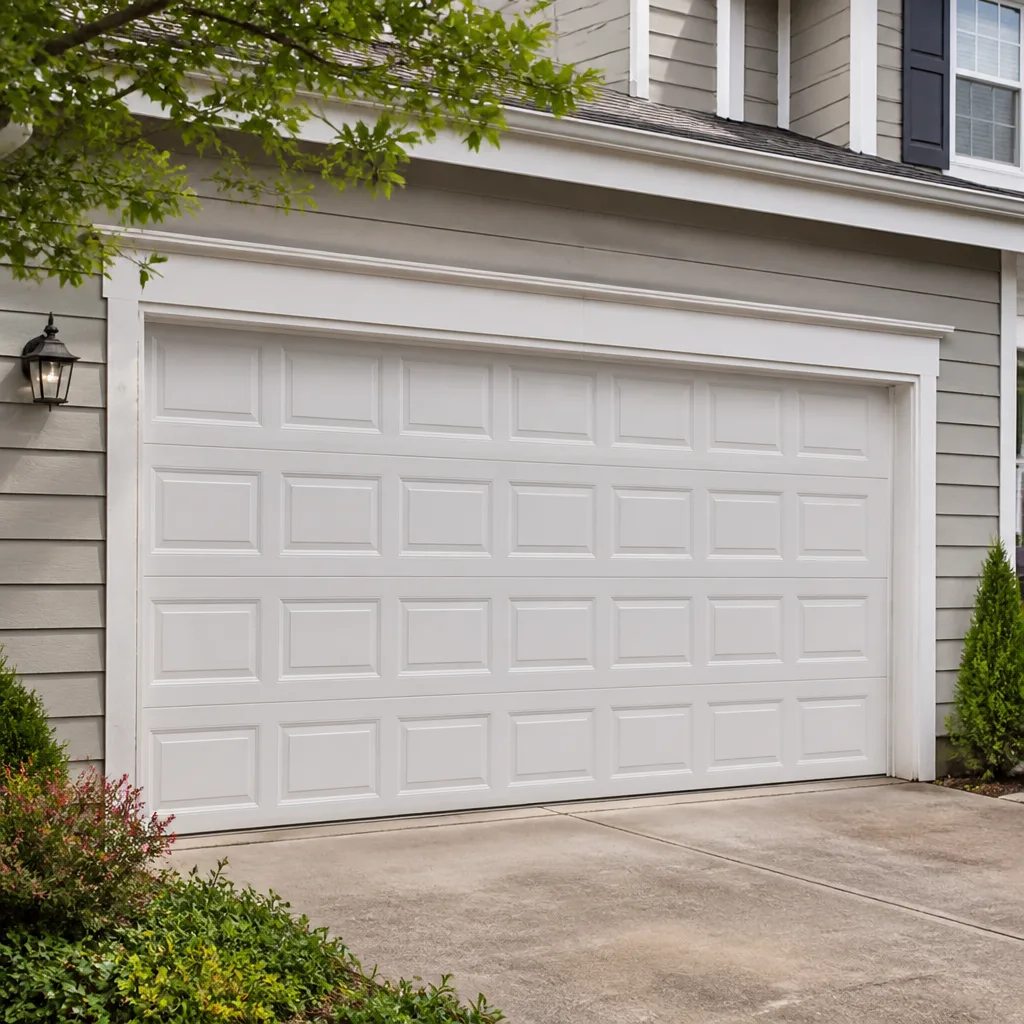 Raised-panel steel
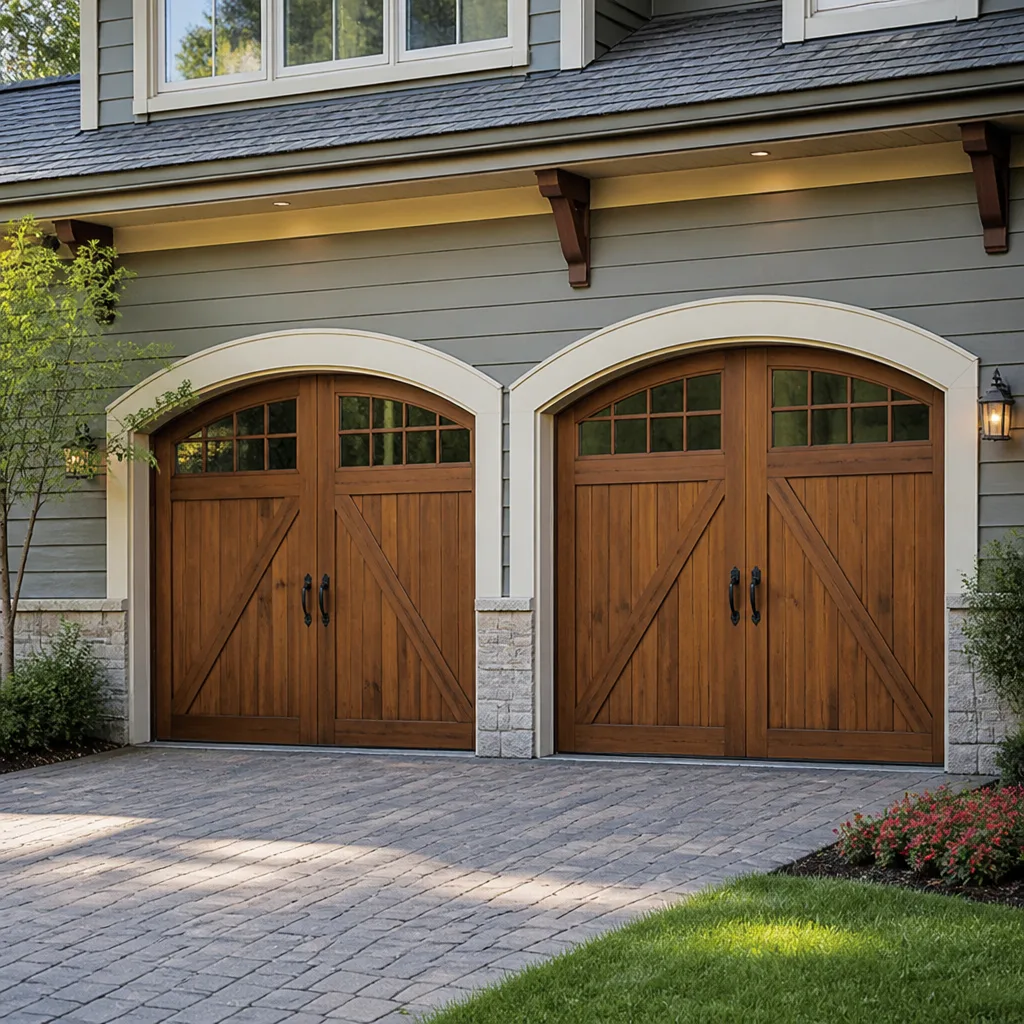 Carriage house
 Modern flush
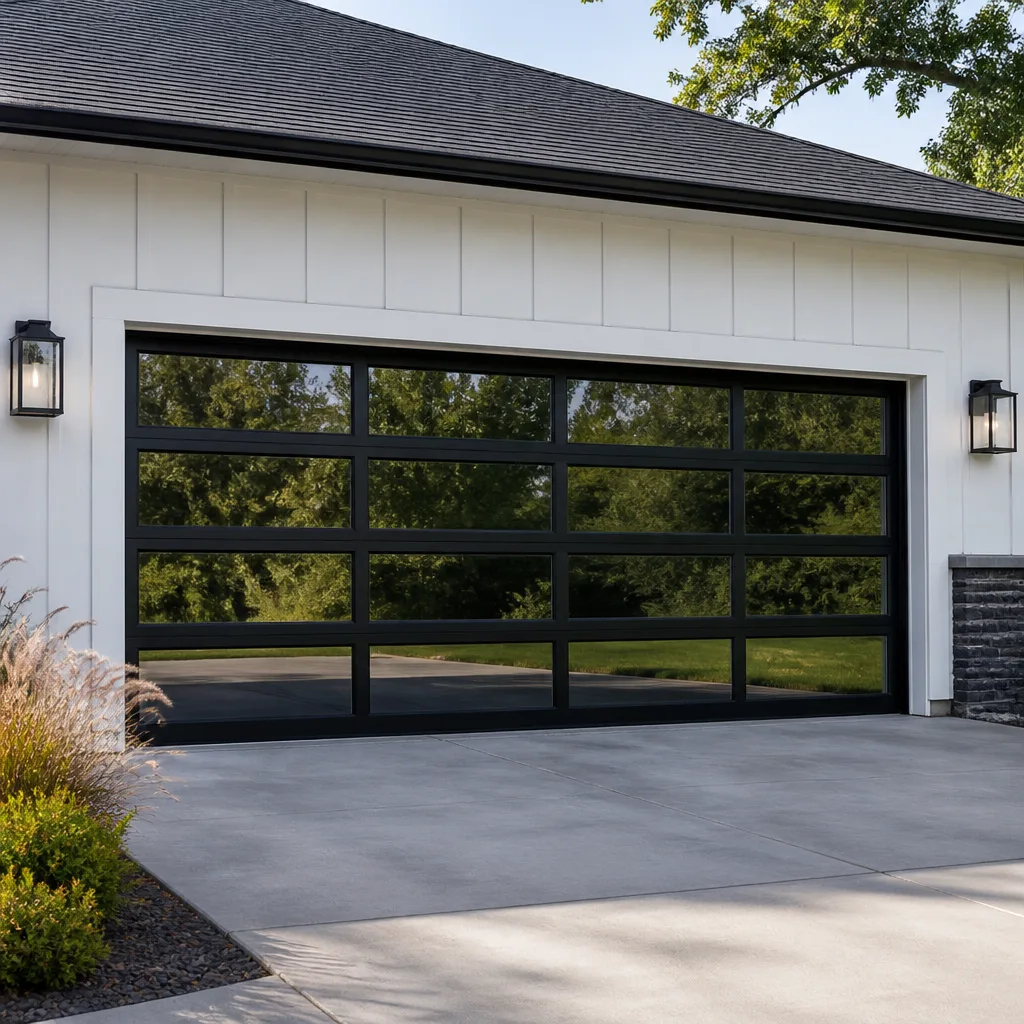 Full-view glass
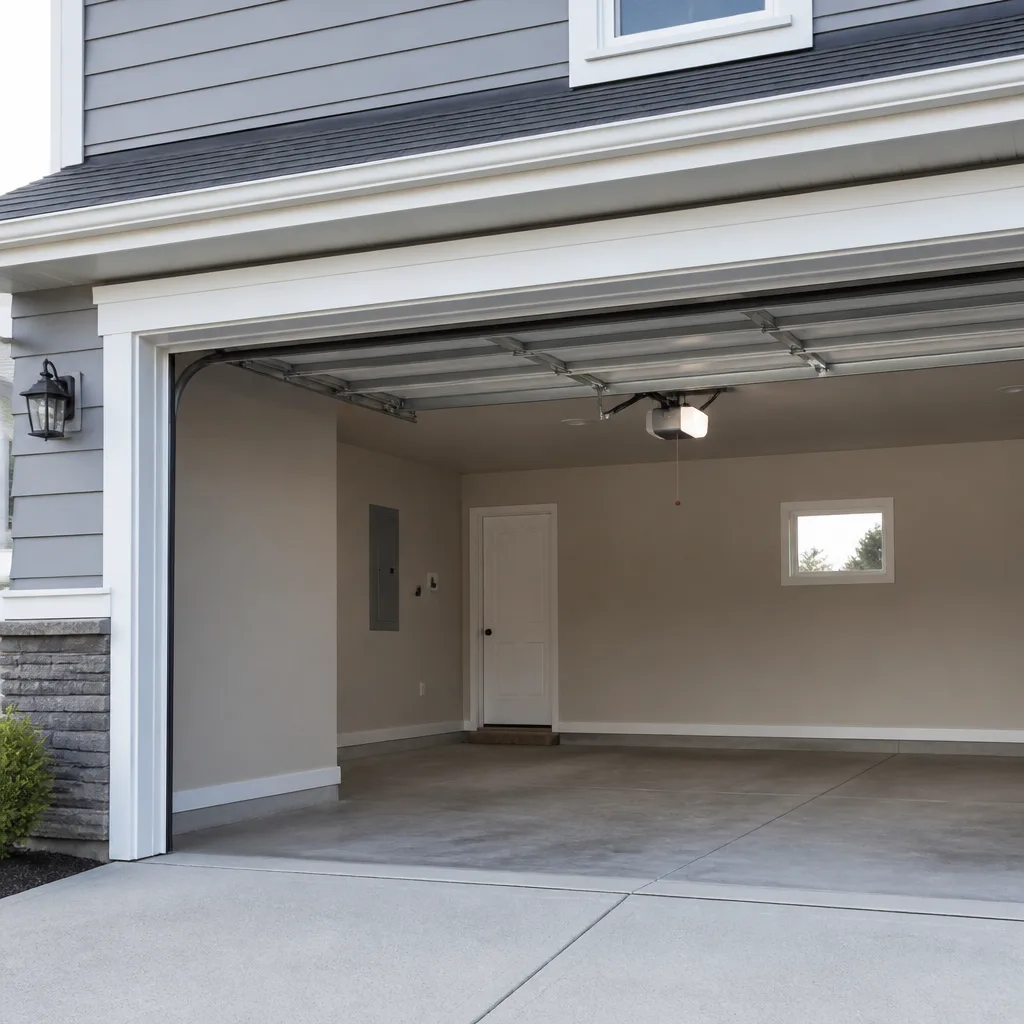 LiftMaster openers
 Chamberlain openers
Full 25-point door and opener safety check with every visit - springs, cables, rollers, tracks, and your LiftMaster or Chamberlain opener included
You get a price before we start. It does not change when the pro arrives.
Get your free estimateHow to Hire a Garage Door Contractor in Meridian: A Step-by-Step Guide
The most common misconception about hiring a garage door contractor in Meridian is that any company advertising garage door service must know what it’s doing. In a metro growing this fast, that assumption costs homeowners real money. When a business handles fencing, drywall, and odd jobs alongside garage doors, the problem usually isn’t incompetence. It’s that parts sourcing, warranty claims, and callback accountability all quietly suffer when garage doors aren’t the core of the business. This guide walks you through a concrete vetting process: how to check credentials, verify brand knowledge, ask the right questions, and read an estimate line by line so you know exactly what you’re paying for. Meridian homeowners deserve a clear process, not a gut feeling.
Quick Answer
To hire a garage door contractor in Meridian, verify Idaho contractor registration through the state’s online lookup, confirm the company specializes in garage doors rather than treating them as a side service, ask whether they use OEM parts for brands like LiftMaster and Clopay, and insist on a written estimate with itemized parts and labor before any work begins. A dedicated specialist will pass these checks without hesitation, while an opportunistic generalist usually won’t get past the second one.
Styles & brands we work with
- Raised-panel steel
- Carriage house
- Modern flush
- Full-view glass
- LiftMaster openers
- Chamberlain openers
Table of Contents
- Why a Garage Door Specialist Beats a Generalist
- How to Check an Idaho Contractor License
- Why Manufacturer Authorization Matters
- The Five Questions to Ask Before Accepting a Quote
- How to Read a Garage Door Estimate Line by Line
- Red Flags Specific to the Meridian and Boise Market
- A Step-by-Step Vetting Walkthrough
- What Garage Door Work Typically Costs in Meridian
Why a Garage Door Specialist Beats a Generalist
A dedicated garage door company spends its working hours on torsion systems, track alignment, and opener logic boards, so it diagnoses faster and more accurately than a crew splitting its attention across plumbing, HVAC, and general handyman work. That matters most when your door stops working on a Wednesday afternoon and you need a real answer, not an appointment that turns into guesswork.
Garage doors are a system, not a single object. A door that binds and reverses involves the spring balance, the track plumb, the hinge spacing, and the opener’s force settings. Each piece has to be checked in context. A generalist who mostly installs fences may look at the same door and see a door that won’t close. A specialist sees the symptom and traces it back to the actual cause, which usually means one repair instead of three.
When you’re assessing a contractor in Meridian, ask how much of their work is garage doors. The answer tells you almost everything. A specialist talks about brand systems naturally, because they interact with the same hardware every day. A generalist reads the model number off the door. Listen for the difference.
There’s a sourcing angle too. Garage door parts are not interchangeable commodities. A torsion spring is rated for a specific cycle count, a set of rollers fits a specific track profile, and a photo-eye bracket is engineered for a specific opener head. A specialist who regularly works on garage door opener repair has a parts supply chain built for these components. A generalist often improvises with whatever the local hardware store stocks, which can mean a spring rated far below what your door actually needs.
One more thing: callbacks. When garage doors are a contractor’s entire trade, they care about getting it right the first time because their reputation depends on it. When it’s a side service bolted onto another business, a callback is an inconvenience, not a priority. Full-spectrum specialists handle the door, the hardware, and the opener in one visit, so there’s no finger-pointing between trades if something fails later.
The simplest way to sum it up: garage doors are the whole trade for a specialist, not a sideline. That focus is why diagnosis is faster and why the fix tends to hold.
How to Check an Idaho Contractor License
Idaho requires contractors to register with the Idaho Contractors Board, which operates the online lookup through the Idaho Bureau of Occupational Licenses. Before signing anything, ask for the company’s registration number and verify it yourself on the state site.
Here’s the process, step by step:
- Ask for the registration number in writing. A legitimate contractor gives it to you without argument, usually on the first page of the estimate.
- Look the number up on the Idaho Contractors Board database. The bureau’s public search shows whether the registration is current or lapsed.
- Confirm the legal business name matches. If the estimate says one company and the database shows a different entity, ask why.
- Check the complaint history. Complaints alone don’t mean a company is bad, but a consistent pattern of unresolved ones does.
- Verify the insurance certificate. Idaho contractors need liability coverage. Ask for a current certificate of insurance and, if you want to be thorough, call the insurer to confirm it’s active.
- Ask about workers’ compensation. If a company has employees, workers’ comp is a real requirement. If they say every worker is a subcontractor, ask who insures them.
What should a valid garage door technician’s credentials actually show? Registration with the Idaho Contractors Board, active liability insurance, and coverage under workers’ comp if the company has employees. Those three things are the baseline. Anything less and you’re carrying risk you don’t need to carry.
What they will not show is a garage-door-specific license, because Idaho doesn’t issue one. That’s why the rest of this guide matters so much. State registration tells you a contractor is legally operating. It doesn’t tell you they know how to safely replace a torsion spring on a 16-foot Clopay door. The registration check is the floor, not the ceiling, of your vetting process.
One practical note for Meridian: the Boise metro attracts a lot of out-of-state contractors who register a local LLC but operate from out of the area. A local address isn’t required by law, but it’s worth asking where the technician will actually come from. A crew driving in from two counties away can’t respond to a callback quickly.
Why Manufacturer Authorization Matters
Manufacturer authorization means the brand formally recognizes a contractor for installation, warranty service, or both on its products. LiftMaster, Chamberlain, Clopay, and Amarr all maintain authorized contractor networks, and being in that network tells you the contractor has met the brand’s training, insurance, and business practice standards.
Why this matters when your opener fails: if a contractor isn’t authorized, the warranty protection on your existing equipment can get murky. A component replaced outside the authorized network might not preserve the original coverage. When authorization is in place, warranty claims move through a recognized channel.
Verifying it takes about two minutes:
- Ask the contractor directly. “Are you authorized by the brand that made my opener?” A specialist answers in a sentence, sometimes with the brand’s dealer locator as a reference.
- Search the brand’s website for its contractor directory. LiftMaster and Chamberlain both publish dealer lookups. Clopay has a similar resource.
- Cross-check the company name and town. The listing should show the company’s name and the city it serves.
A contractor doesn’t have to be authorized to do good work. Plenty of skilled specialists operate independently. But authorization is a fast, free signal. If a company claims to be authorized and doesn’t appear in the manufacturer’s own directory, ask them to explain the gap. A straight answer is a good sign. A defensive one is not.
One caution: some contractors state or imply authorization they don’t have. That’s a claim the manufacturer’s own directory can settle, which is why the two-minute check matters. Neither manufacturer authorization nor an exclusive relationship is invented on a good estimate. If a contractor backs up the claim with a name and a page number, they’ve probably earned it.
As a general guide: when we work on LiftMaster, Chamberlain, Genie, or Clopay systems, we know the common failure points from the inside. Whatever the specific authorization, the proof is in how quickly and accurately the contractor diagnoses the problem and whether the fix holds. Ask for the model, the part, and what happens if it fails again in a month. The answer is where specialists separate from generalists.
The Five Questions to Ask Before Accepting a Quote
These five questions cut through sales scripts and reveal how a contractor actually operates. Ask all five before you agree to anything.
1. What percentage of your work is garage doors?
Anything less than a clear majority of the business tells you garage doors are a side service. That’s not automatically disqualifying, but it should make you ask harder questions about parts and callbacks. A specialist answers this instantly because the number is the whole business.
2. Do you use OEM parts, and can you show me the part number?
OEM stands for original equipment manufacturer. A spring, roller, or opener component should match the ratings of the original in your door or opener, not just fit the space. Gray-market parts are a real market problem in the Treasure Valley, and they fail faster. When the technician arrives, the part should have a visible manufacturer label. If the part arrives without packaging or labeling, ask for the source.
3. Will you give me a written estimate before any work begins?
A legitimate estimate is written, itemized, and agreed on before the first wrench turns. If a contractor wants to “take a look and see how it goes,” that’s your signal to find another contractor. The price you agree to is the price you pay, with no surprises at invoice time.
4. Will the same person who quotes the job do the work?
Some companies send a salesperson to quote and a separate crew to install. That’s not always a problem, but ask who’s accountable. If the answer is a dispatcher you’ll never speak to, you’ve just learned something about how callbacks will go.
5. What happens if the repair fails within the first few months?
Warranty terms on labor and parts vary. Ask explicitly. A contractor with a clear answer has thought about it. A contractor who dodges the question hasn’t, or doesn’t want you to know. No specific warranty number should be assumed unless it’s written on the estimate.
How to Read a Garage Door Estimate Line by Line
A legitimate garage door estimate separates parts, labor, and any additional items, and it names the brand and model of every part. A vague one-page number with no breakdown hides padding.
Start with the parts line. A proper estimate names the part and its rating. A torsion spring should say “torsion spring, rated for [X] cycles” or at minimum the correct wire gauge and length. A roller should say which type. If the parts section is a single lump sum, ask for it broken out.
Then look at labor. Labor is usually a single line, but it should match the scope of the job. Spring replacement, opener diagnostic, and new-door installation are completely different labor scopes, and a spring job quoted at installation-level labor is a red flag.
Here’s what should always be itemized separately:
- Springs: named as one spring or a pair. Never a lump sum of “springs.”
- Cables and drums: if they need replacement, they’re a separate line, since using old cables with new springs is a known failure path.
- Rollers, hinges, and bearings: each listed individually or as an explicit bundle.
- Opener parts: logic board, motor, gear assembly, or safety sensor identified by model.
- Disposal of old parts: sometimes a real line item, sometimes not. Ask.
- Total price: stated clearly, with the words “written estimate” and a signature line.
What’s legitimate: every one of those items. What’s padding: a “shop supplies” charge with no dollar justification, a “miscellaneous hardware” line with no itemization, or two separate charges for the same labor. A specialist doesn’t need padding because the work itself is the value.
For a deeper read on typical ranges, our garage door repair page walks through what each common job costs in Meridian. And if your opener is the problem, the opener-specific breakdown on garage door opener repair covers what’s usually behind a “door won’t respond” complaint.
Red Flags Specific to the Meridian and Boise Market
Every market has its specific risks. In Meridian and the greater Boise area, these four show up over and over.
Out-of-state LLCs registered locally
The Treasure Valley’s construction boom has attracted contractors who form a local LLC but operate from out of state. The LLC looks legitimate on paper. The problem is accountability: if a repair fails in a month, is the crew still in the area? Ask where the technician will travel from. A straight answer is a good sign.
Door-to-door solicitation after windstorms
After a windstorm or a cold snap, door-to-door crews appear offering to “fix” garage door damage. Some are legitimate. Many aren’t. A storm is when a door needs the most careful diagnosis, not the fastest. If a stranger knocks and says your door needs work they just noticed from the street, get a second opinion from a specialist.
Bait-and-switch spring pricing
Spring replacement is the most quoted and most markable-up repair in the trade. A very low advertised price for “spring replacement” often becomes a higher invoice once the technician arrives and says your door needs more than what was quoted. The written estimate is your protection. Agree on the price in writing before the work begins.
“We service every brand” with no specific knowledge
A crew that claims to service every brand often means they’ve learned on the job. Ask which brands they work on regularly and what specific parts they source. If the answer is “all of them,” push further. If you hear Chamberlain, LiftMaster, Genie, or Clopay named specifically, with the model families behind them, that’s a specialist talking.
A Step-by-Step Vetting Walkthrough
Here’s the whole vetting process condensed into a sequence you can run through in an afternoon, even if you’re comparing contractors for the first time.
- Search first. Look up the company name plus “garage door” plus “Meridian” and see what comes back. Reviews matter, but so does whether the business is mentioned in garage-door-specific contexts.
- Check the Idaho Contractors Board registry. Verify registration and insurance, as covered above.
- Ask the specialization question on the phone. “What percentage of your work is garage doors?” A half-answer is your answer.
- Request a written estimate before booking. Some companies provide estimates over the phone for common repairs. Others send a technician. Either way, the written price comes before the work starts.
- Ask the five questions (above) on that first call or at the estimate.
- Confirm OEM parts and ask for the part number that will be used.
- Ask who actually does the work and how callbacks are handled.
- Get the estimate in writing and read it line by line.
- Compare at least two estimates. The cheapest one and the most expensive one are both worth understanding.
- Call to book. Once a contractor has passed the first eight steps, you’ve done the diligence and can move forward with confidence.
This process takes maybe 30 to 45 minutes per contractor. That’s a small investment compared to the frustration of an unresolved repair or an invoice that doesn’t match the quote. If you’ve never done this before, we’re happy to talk it through. Highland Garage Door Repair works on doors and openers in Meridian every week, and a free estimate is a good place to start.
See our Meridian page for more on the specific neighborhoods and patterns we encounter in this city.
What Garage Door Work Typically Costs in Meridian
These are typical estimated ranges for common jobs in and around Meridian. Actual prices are set per job by a written estimate after a technician or estimator sees your door, its brand, and the scope of work.
- Single torsion spring replacement: typically $180 to $340 for one spring. A matched pair is usually replaced together, so a pair runs about twice that.
- Cable replacement: typically $150 to $280 per side, depending on whether the drum is also replaced.
- Roller and hinge replacement: typically $140 to $260 for a set, depending on size and door type.
- Opener repair or logic board replacement: typically $180 to $350, varying by brand and model.
- Full opener replacement (unit plus install): typically $350 to $650 for common residential models.
- Safety sensor or photo-eye replacement: typically $120 to $220.
When you get an estimate in Meridian, the written price is the price, and it’s agreed before any work starts. If a contractor quotes a range over the phone and the written estimate comes back at the top of that range, that’s fine; what’s not fine is a written estimate that grows while the technician is on the property.
Garage doors use high-tension springs and cables under significant stored energy. A spring or cable failure can cause serious injury, and the components should only be replaced by a trained professional. If you’re looking at your door and wondering whether to attempt a DIY replacement, the answer is almost always no. Call a licensed specialist. For a broader look at related services in the area, our Highland Garage Door Repair page gives an overview of the range of work we handle.
Common Mistakes to Avoid
- Hiring on price alone. In the Meridian market, the lowest spring quote often becomes the highest invoice after an upsell. The written estimate is your comparison point, not the phone quote.
- Skipping the state lookup. Idaho’s registry is public and free. Not checking it is like buying a used car without popping the hood. Two minutes today saves an argument later.
- Accepting vague estimates. A single lump sum with no parts breakdown is a red flag every time. Ask for itemization before you agree to anything.
- Assuming “we service all brands” means expertise. Ask which brands they work on specifically. If they can’t name the model family, they’re probably guessing.
- Letting a door-to-door offer override your process. Post-storm solicitation is common in the Treasure Valley. The vetting steps apply on every job, not just the ones you initiated.
- Ignoring the opener when the door is the problem. A single failing component can look like a door problem but live in the opener. A specialist checks both in the same visit.
- Not asking about callbacks. If a repair fails within weeks, who pays? Ask before the tech arrives.
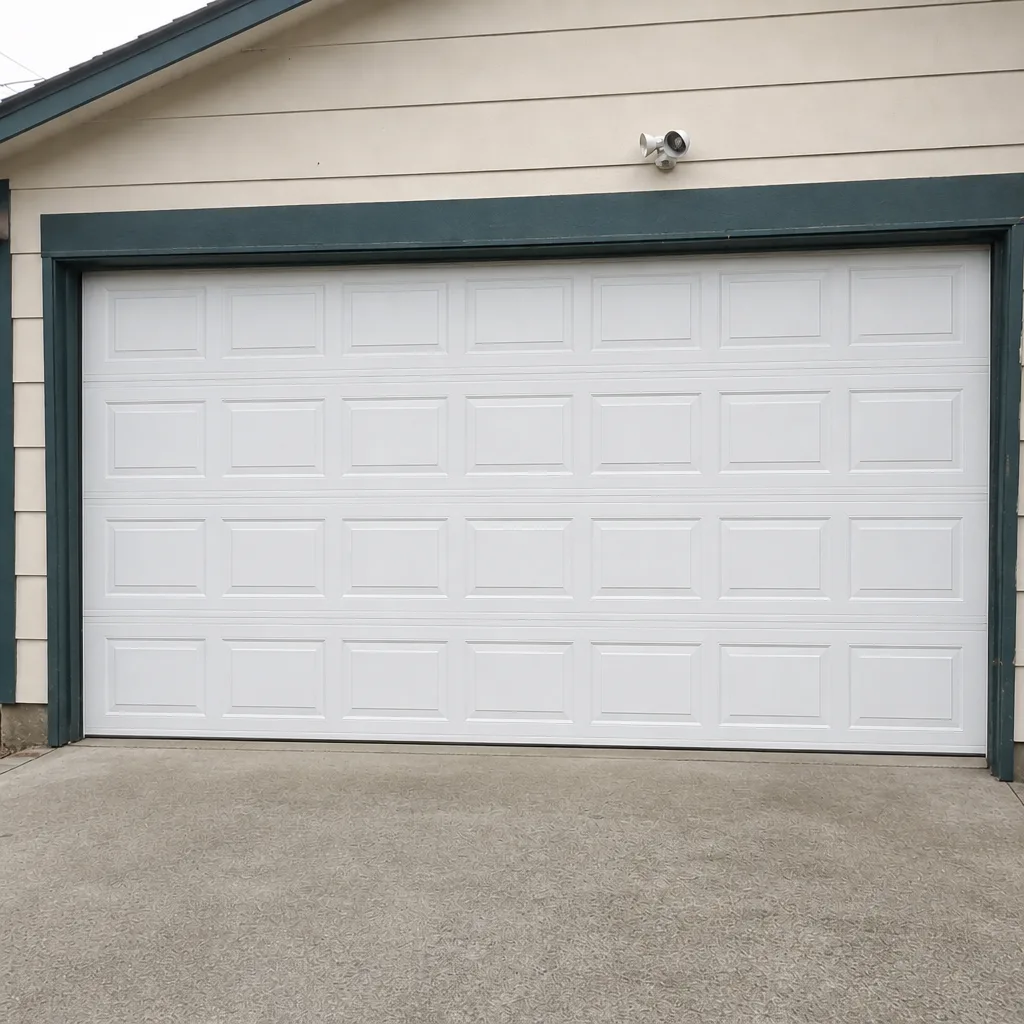
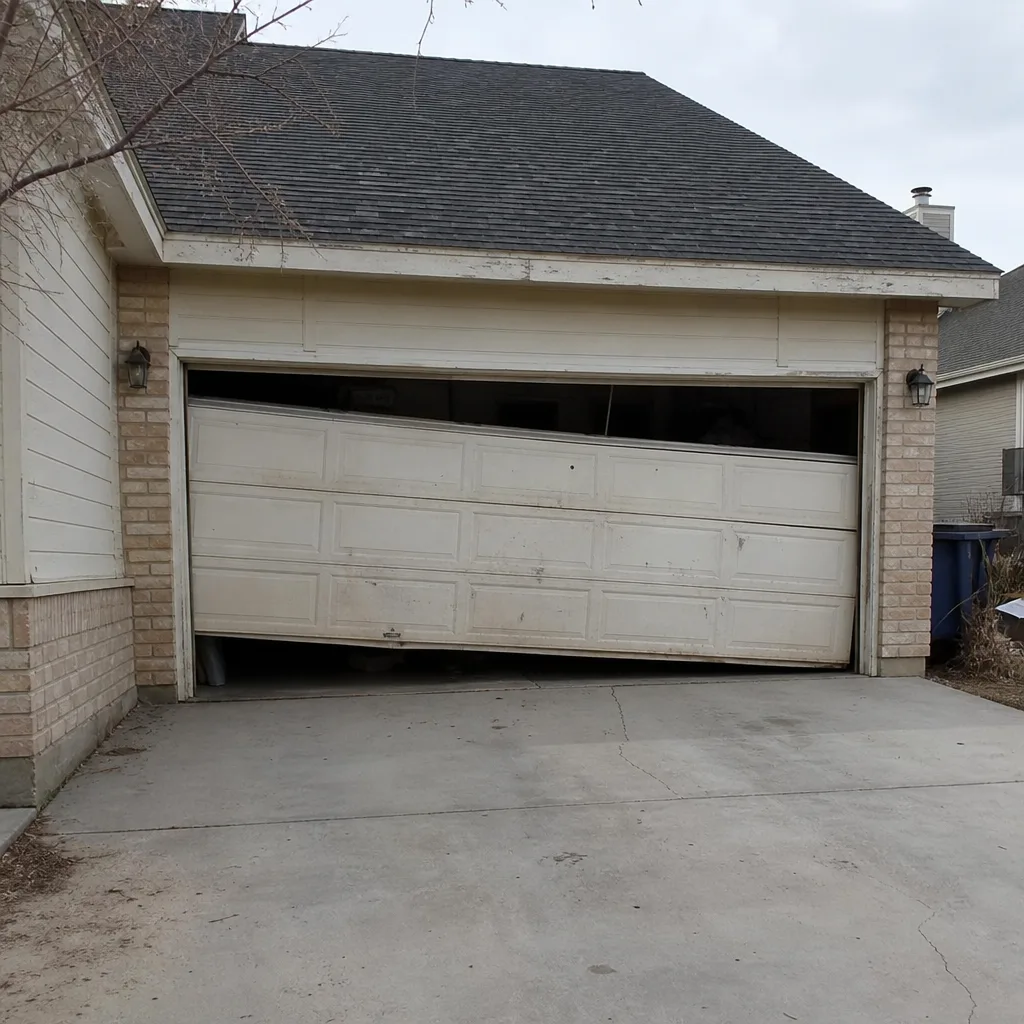
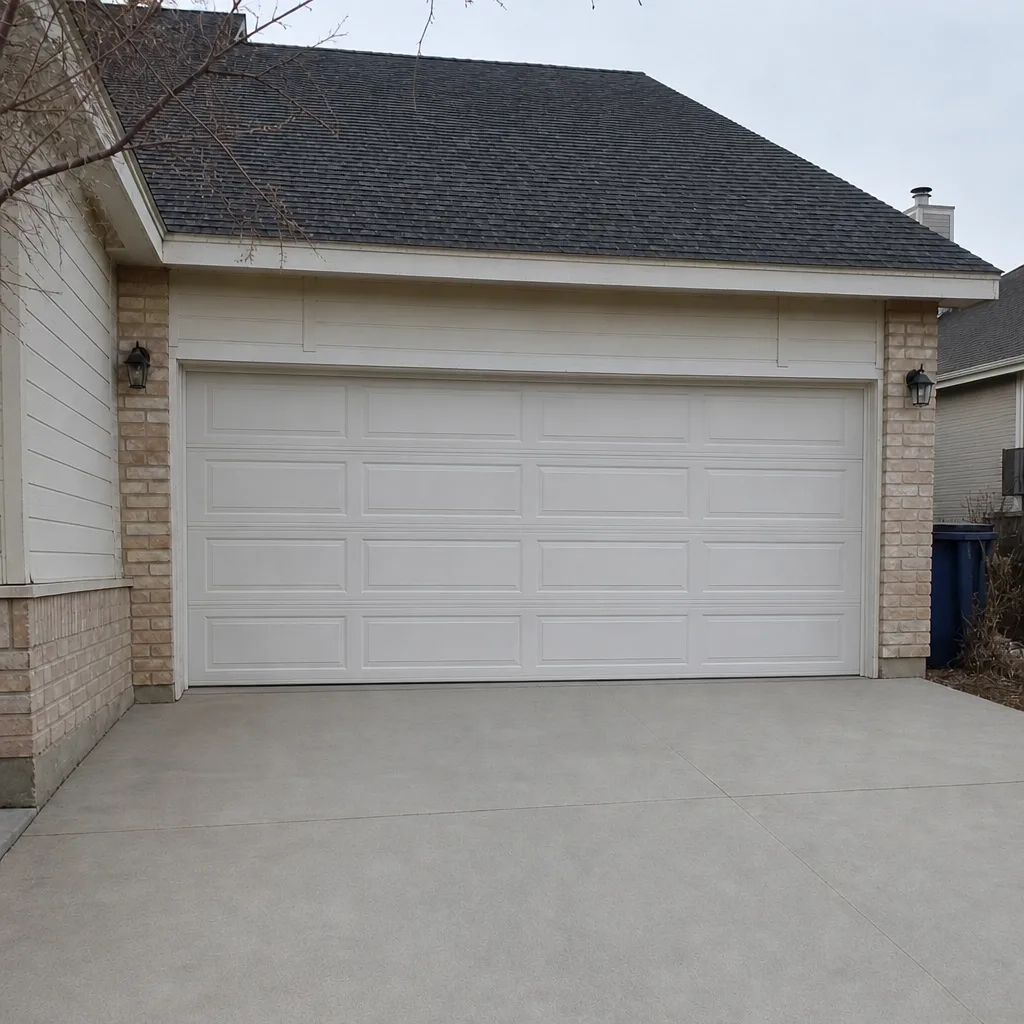
See the difference
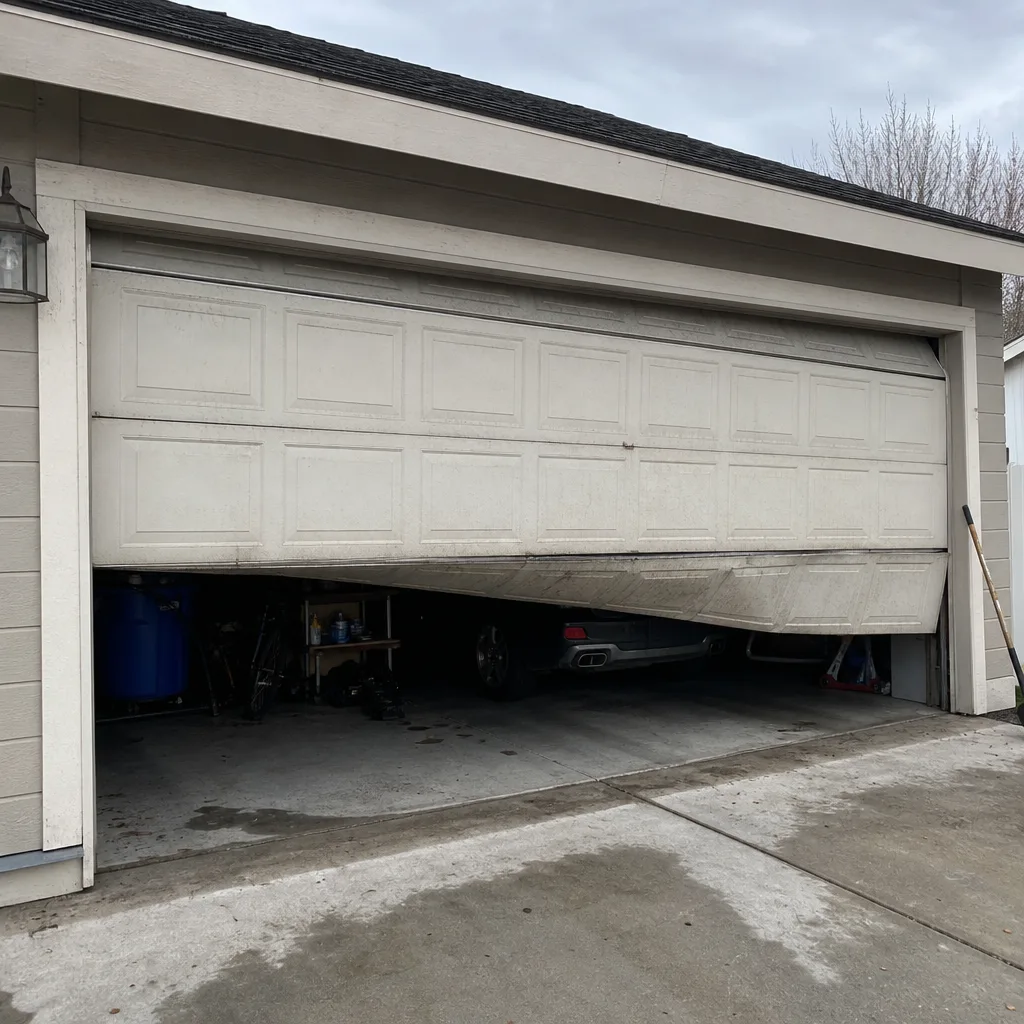 Before
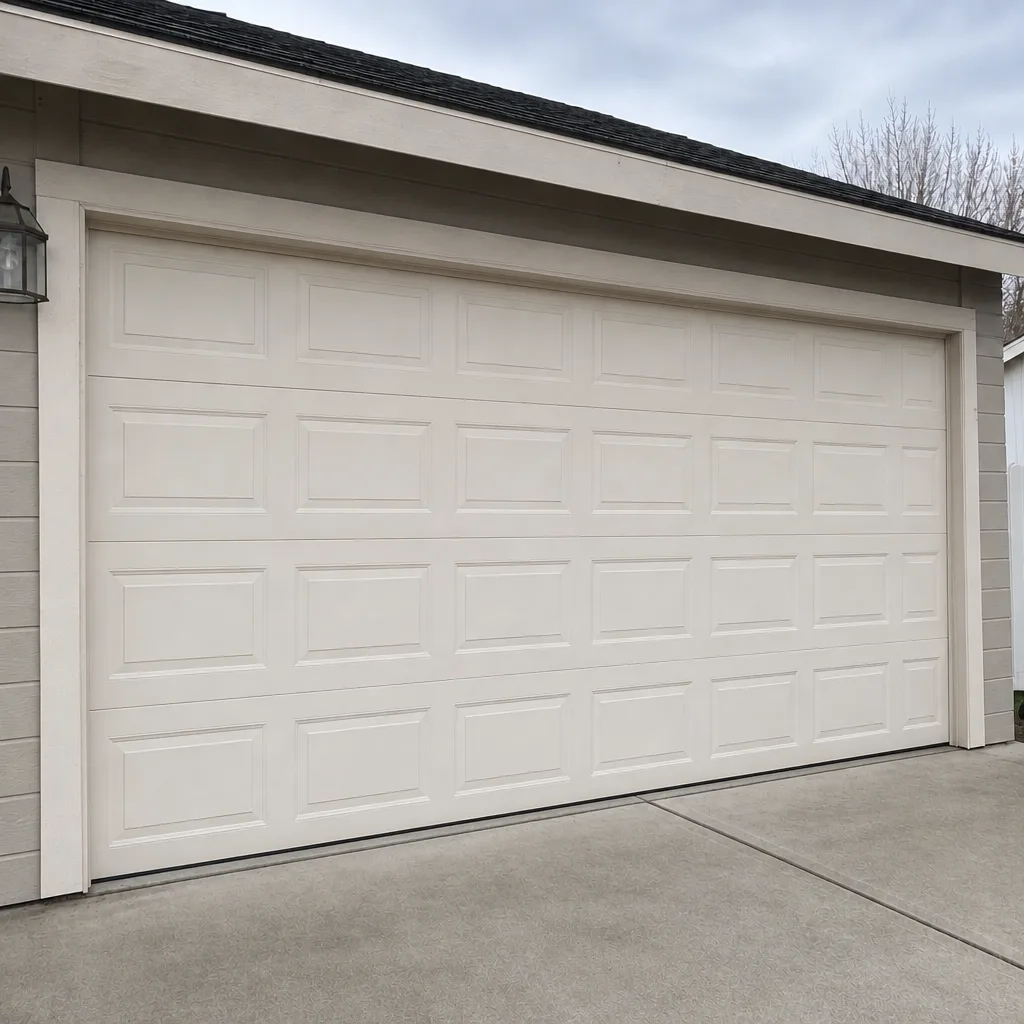 After
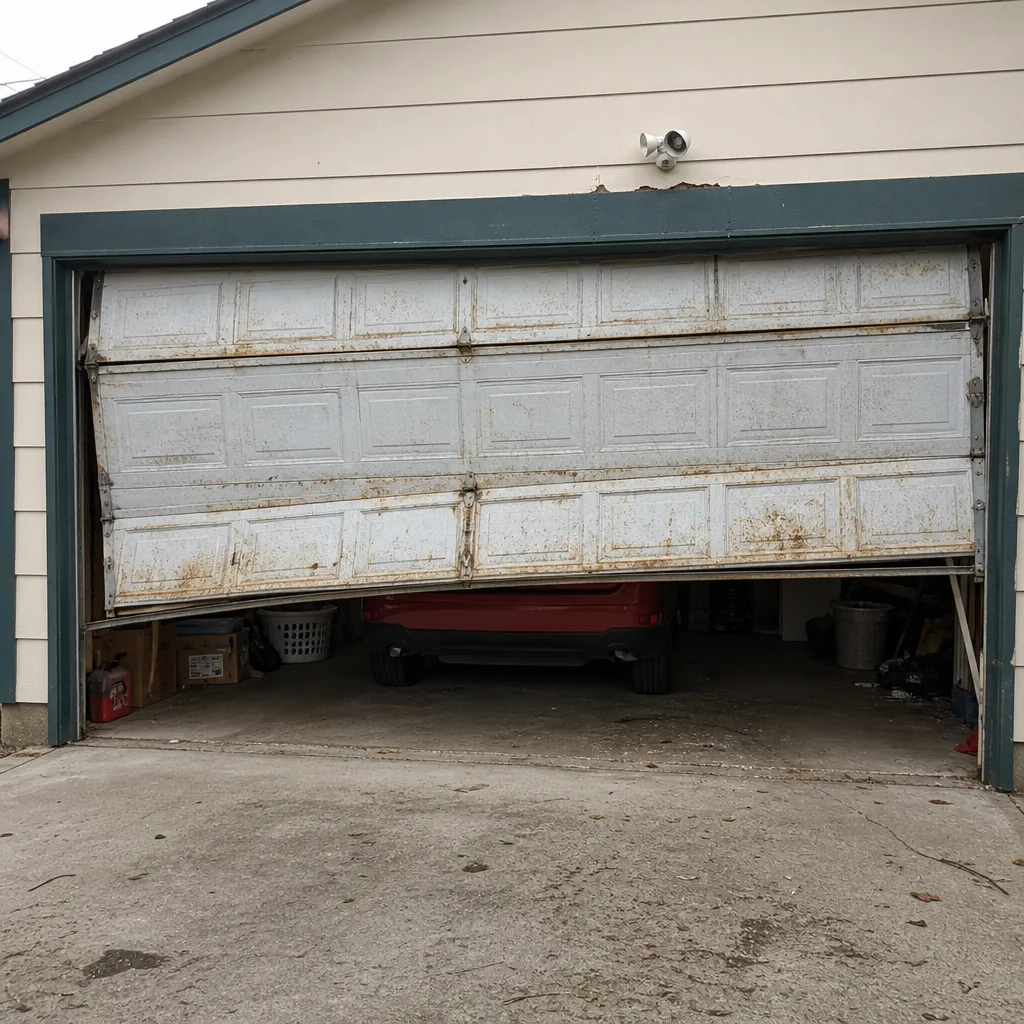 Before
 After
 Before
 After
When to Call a Professional
Call a professional for any scenario involving torsion springs, cables, or the track system. Those components store enough energy to cause serious injury. Also call when the door doesn’t close evenly, when the opener reverses without an obstruction, when the door is coming off its tracks, or when you’ve heard a loud snap from overhead and the door won’t lift at all. Those are the cases where diagnosis is worth doing right the first time. Highland Garage Door Repair offers free estimates in Meridian, with fast dispatch from 7am to 7pm. Call (833) 361-4641. We answer 24/7.
Frequently Asked Questions
Spring replacement in Meridian typically costs $180 to $340 for one spring. Because matched pairs are usually replaced together on the same door, a pair runs about twice that, and the written estimate you approve before work starts is the price you pay. Call (833) 361-4641 for an exact quote. Estimates are free.
Look the company up on the Idaho Contractors Board registry, which is operated through the Idaho Bureau of Occupational Licenses. Ask for the registration number, verify it’s current, confirm the legal business name matches your estimate, and request a certificate of insurance. Call (833) 361-4641 if you want help interpreting what you find.
Yes, many repairs can be diagnosed and completed the same day when a specialist confirms the parts are on hand. Openers, sensors, rollers, and hinge repairs are usually same-day. If a model-specific part has to be ordered, the job is scheduled for a later date. Call (833) 361-4641 for a same-day slot.
Ask five things: what percentage of the business is garage doors, whether the technician uses OEM parts, whether the estimate is written and agreed before work, who actually performs the work, and what happens if the repair fails within a few months. A specialist answers all five without hedging. Call (833) 361-4641 for a free written estimate.
Yes. The written estimate sets the final price, agreed before any work starts. If a technician discovers additional issues on site, they should stop, explain the new scope, and get your approval before continuing. That’s the standard we hold. Call (833) 361-4641 for an upfront price.
We answer 24/7. A call outside dispatch hours is booked into the next opening, Sunday through Friday, 7am to 7pm. You’ll get a clear time window, and the estimate remains free. Call (833) 361-4641. We answer 24/7.
Yes. The technicians who work on Meridian jobs are registered through Idaho’s contractor system and covered under the company’s liability insurance. We can walk you through how to verify that, and we recommend you do verify it before any work begins. Call (833) 361-4641 to get the details you need to confirm it yourself.
The Bottom Line
Hiring a garage door contractor in Meridian comes down to verifying four things: registration with the Idaho Contractors Board, ongoing insurance, a genuine garage-door specialization, and an itemized written estimate agreed before work starts. Everything else is noise. The Treasure Valley’s construction boom has flooded the local market with generalists and out-of-state operators, so a concrete vetting process matters more here than in a slower metro. The five questions and the estimate walkthrough in this guide work because they’re the same ones we’d apply to our own work. A specialist answers them without hesitation. A generalist changes the subject. If it’s time to get a real answer on your door, call Highland Garage Door Repair at (833) 361-4641 for a free estimate. We answer 24/7. Fast dispatch, 7am-7pm.
Written by the team at Highland Garage Door Repair.